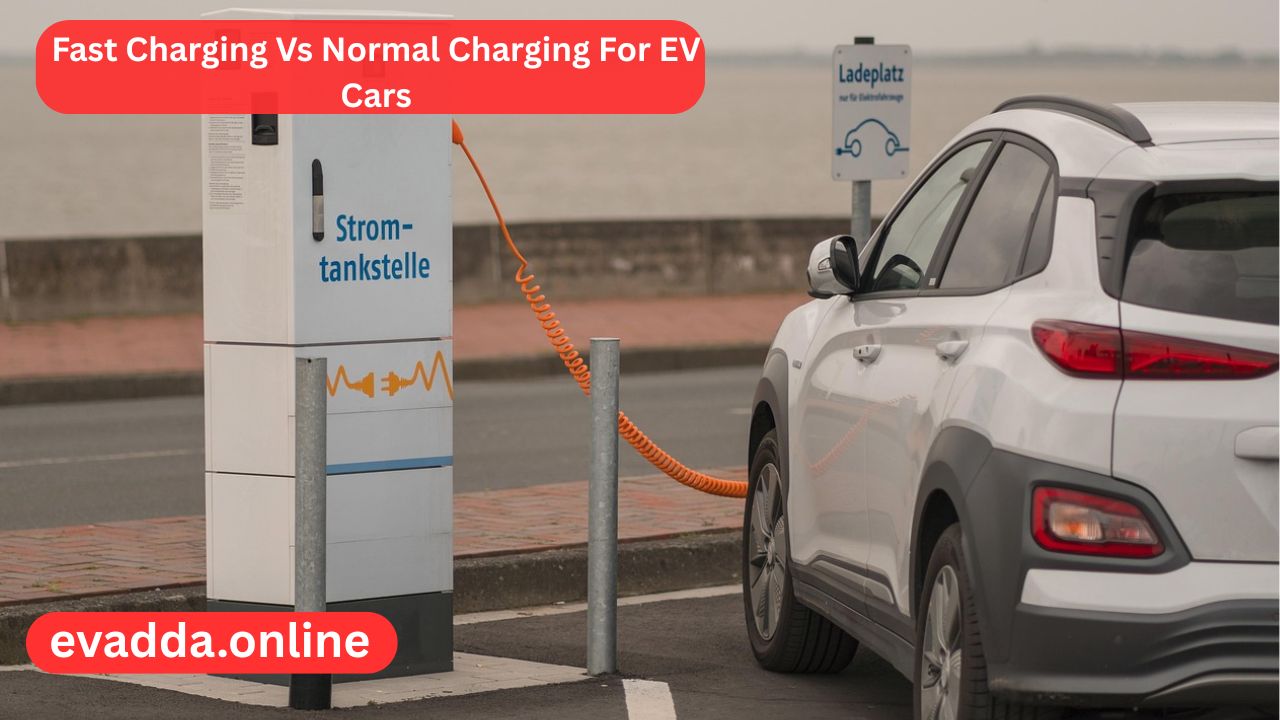
Electric vehicles are gradually becoming a common part of life in India. More EV models are reaching the roads, and charging stations are coming up in cities and across highways
One question keeps coming up for new buyers and existing owners alike, fast charging or normal charging what’s better?
The answer isn’t as simple as one being “Good” and the other “Bad.” It depends on how you drive, where you live, and how you plan your charging. Let’s understand it in a simple way.
Table of Contents
Fast Charging vs Normal Charging for EV Cars
At the most basic level, EV charging is divided into two types, normal charging (AC charging) and fast charging (DC charging).
Normal charging uses alternating current, the same type of electricity that powers your home. Fast charging uses direct current and skips some steps to send power straight into the battery. This difference is what makes charging speeds vary so much.
In daily use, most EV owners end up using a mix of both.
What Is Normal (Slow) Charging and How It Works
Normal charging, also called slow or AC charging, is what most people use at home or at workplaces.
- Level 1 charging uses a regular household socket. It’s slow, adding limited range per hour, and usually works best if your daily driving is low.
- Level 2 charging uses a dedicated charger with higher voltage. This is the most common setup for home wall boxes and public AC chargers in malls, offices, and parking lots.
Normal charging usually takes several hours to fully charge an EV, which is why many people plug in overnight. Since the power flow is steady and lower, it puts less stress on the battery.
What Is Fast Charging And Why It’s Different
Fast charging, also known as DC fast charging, is designed for situations where time matters.
Instead of sending AC power to the car and letting the vehicle convert it, DC chargers do the conversion themselves. This allows much higher power levels. On highways and major routes, fast chargers can bring a battery from low charge to around 80% in 30–40 minutes, sometimes even less.
Fast charging stations are usually found
- Along highways
- At fuel stations
- In busy commercial hubs
They are not commonly installed at homes due to cost and power requirements.
Fast Charging vs Normal Charging Battery Life
This is where most concerns come in. Many people worry that fast charging will damage the battery quickly.
In reality, modern EV batteries are designed to handle fast charging. Battery management systems carefully control temperature, voltage, and charging speed. Occasional fast charging does not harm the battery in any meaningful way.
However, exclusive and frequent fast charging can lead to slightly faster battery degradation over time. The reason is simple: high power creates more heat and on battery cells.
Normal charging is gentler and is generally better for long-term battery health. That’s why most manufacturers and experienced EV owners recommend
- Use normal charging for daily needs
- Use fast charging when time is limited or during long trips
Fast Charging vs Normal Charging for EV Cars in India
In India, charging habits are shaped by infrastructure and living conditions.
Many people live in apartments where installing a private charger isn’t always possible. In such cases, public charging becomes essential. Cities now have a growing mix of AC chargers and DC fast chargers, especially in metros.
Indian conditions also mean
- High temperatures, which already stress batteries
- Power supply limitations in older buildings
- Growing but still uneven fast-charging coverage
For most Indian EV owners, relying fully on fast charging is possible, but having access to at least one reliable AC charger nearby makes life much easier.
Fast Charging vs Normal Charging for EV Cars Cost
Cost is another big difference between the two.
Normal charging is cheaper. Home electricity rates or workplace chargers usually cost far less per unit compared to public fast chargers. Over time, this Gap becomes more noticeable.
Fast charging is priced higher because
- Equipment is expensive
- Power demand is high
- Operators recover infrastructure costs
In some cities, fast charging can come close to petrol costs per kilometre. That’s fine for occasional use, but using it daily can become expensive.
Slow Charge vs Fast Charge Car Battery Daily Use vs Long Trips
Think of normal charging as your regular routine and fast charging as a backup.
- Daily commuting: Normal charging works best. Plug in at night, wake up to a charged car.
- Unexpected travel: Fast charging helps when plans change.
- Highway driving: Fast chargers make long-distance EV travel practical.
Cars spend most of their time parked. Using that parked time for slow charging makes more sense than waiting at fast chargers unless you really need to.
Choosing the Right Charging Method for Your Lifestyle
There’s no single right answer for everyone.
- If you have home charging, use it as your primary option.
- If you don’t, look for AC chargers near your office, mall, or regular stops.
- Keep fast charging for trips, emergencies, or busy days.
EVs today are built to handle real-world usage, not ideal conditions. Using fast chargers sometimes will not suddenly ruin your battery.
Conclusion
Fast charging and normal charging are not rivals, they complement each other. Normal charging keeps running costs low and supports better battery health over time. Fast charging adds flexibility and confidence, especially on long drives or when time is tight.
As charging networks grow and battery technology improves, the gap between convenience and battery care will continue to narrow. Until then, a balanced approach works best. slow when you can, fast when you need to.
FAQs
Q1. Is fast charging bad for EV batteries?
Occasional fast charging is safe. Frequent, exclusive fast charging may slightly increase battery wear over many years.
Q2. Which is cheaper: fast charging or normal charging?
Normal charging is usually much cheaper, especially when done at home or work.
Q3. Can I use only fast charging if I don’t have home charging?
Yes, many people do, but mixing in AC charging when possible is better for cost and battery health.
Q4. How much faster is fast charging compared to normal charging?
Fast charging can add in 30 minutes what normal charging may take several hours to deliver.
Q5. What charging type is best for daily EV use in India?
Normal AC charging is best for daily use, with fast charging reserved for long trips or emergencies.
Read More